Buy sex-community.net ?
We are moving the project
sex-community.net .
Are you interested in purchasing the domain
sex-community.net ?
domain@kv-gmbh.de · 0541-91531010
Buy sex-community.net ?
What is a trapezoid?
A trapezoid is a quadrilateral with at least one pair of parallel sides. The parallel sides are called the bases of the trapezoid, and the non-parallel sides are called the legs. The height of a trapezoid is the perpendicular distance between the two bases. The area of a trapezoid can be calculated using the formula A = (1/2) * (b1 + b2) * h, where b1 and b2 are the lengths of the two bases and h is the height. **
What is the difference between an isosceles trapezoid and an equilateral trapezoid?
An isosceles trapezoid has two sides that are equal in length, while an equilateral trapezoid has all four sides of equal length. In an isosceles trapezoid, the non-parallel sides are of equal length, whereas in an equilateral trapezoid, all four sides are equal. Additionally, the angles in an isosceles trapezoid may be different, while in an equilateral trapezoid, all angles are equal. **

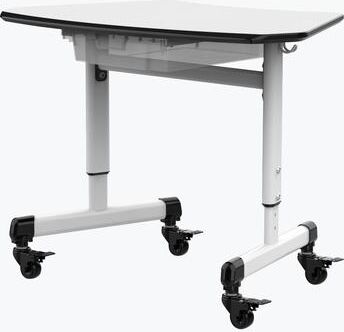
Similar search terms for Trapezoid
Top-Angebote
Products related to Trapezoid:


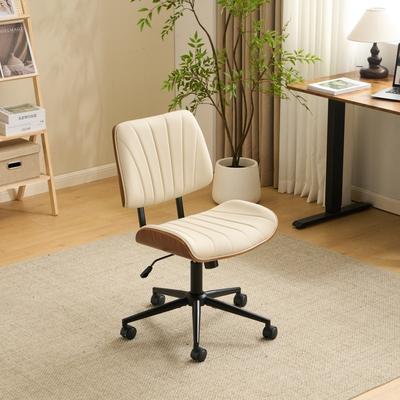
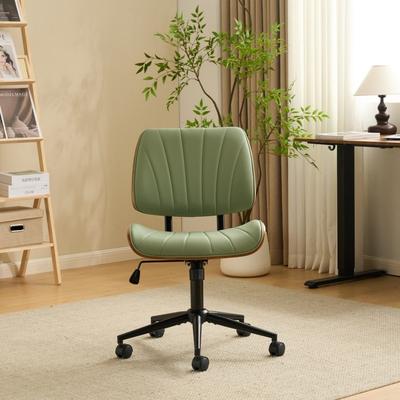
-
What is the difference between an isosceles trapezoid and a symmetric trapezoid?
An isosceles trapezoid is a type of trapezoid where the non-parallel sides are congruent, meaning they have the same length. This results in two of the angles being equal in measure. A symmetric trapezoid, on the other hand, is a trapezoid with a line of symmetry, meaning that if the trapezoid is folded along this line, the two halves will perfectly overlap. This means that the non-parallel sides of a symmetric trapezoid are not necessarily congruent, but the trapezoid has a line of symmetry. **
-
What is a mathematical trapezoid?
A mathematical trapezoid is a quadrilateral with at least one pair of parallel sides. The parallel sides are called the bases of the trapezoid, and the other two sides are called the legs. The height of a trapezoid is the perpendicular distance between the two bases. The area of a trapezoid can be calculated using the formula: 1/2 * (sum of bases) * height. **
-
Is every trapezoid a parallelogram?
No, not every trapezoid is a parallelogram. A trapezoid is a quadrilateral with at least one pair of parallel sides, while a parallelogram is a quadrilateral with both pairs of opposite sides parallel. Therefore, a trapezoid can have only one pair of parallel sides, while a parallelogram has both pairs of opposite sides parallel. So, while some trapezoids can be parallelograms, not all trapezoids are parallelograms. **
-
Is every square a trapezoid?
No, not every square is a trapezoid. A trapezoid is a quadrilateral with at least one pair of parallel sides, while a square is a special type of quadrilateral with four equal sides and four right angles. Since a square has two pairs of parallel sides, it meets the definition of a trapezoid, but not all trapezoids have four equal sides and four right angles like a square. Therefore, while a square can be considered a trapezoid, not every trapezoid is a square. **


What is an isosceles trapezoid?
An isosceles trapezoid is a quadrilateral with two parallel sides of unequal length and two non-parallel sides of equal length. The two non-parallel sides are called the legs, and the two parallel sides are called the bases. The angles between the bases and each leg are congruent, making it a special type of trapezoid. The diagonals of an isosceles trapezoid are also congruent, and the midpoint of the diagonals forms a right angle. **
How do I construct a trapezoid?
To construct a trapezoid, you will need a ruler, a pencil, and a protractor. Start by drawing a horizontal line segment for the base of the trapezoid. Then, draw two slanting lines from the ends of the base to create the non-parallel sides. Use a protractor to ensure that the angles formed by the slanting lines are equal on each side. Finally, connect the endpoints of the slanting lines with a straight line to complete the trapezoid. **
Top-Angebote
Products related to Trapezoid:
-
HQ Smart Sex: A Self-Help Guide to Fun, Pleasure and Relationships - Non Fiction - PaperbackTitle:. Smart Sex: A Self-Help Guide to Fun, Pleasure and Relationships - Non Fiction - Paperback Format: Paperback Overview:. Smart Sex: A Self-Help Guide to Fun, Pleasure and Relationships is a practical, compassionate guide designed to help adults reclaim joy and confidence in their intimate life. In a warm, non-judgmental voice, this paperback edition offers straightforward strategies to boost fun, deepen connection, and improve relationships—whether you’re navigating dating, committed partnerships, or solo exploration. The book covers communication, consent, boundaries, and self-awareness, with actionable exercises, conversation starters, and reflective prompts. Readers will discover how to articulate desires, set healthy expectations, and explore pleasure in a respectful, safe way. The author blends psychology, real-world scenarios, and inclusive language to help readers feel seen and supported. The structure is accessible for beginners but insightful for those who have already started their journey, with practical tips you can try tonight. By focusing on pleasure as a component of well-being, the book reframes sex as something to be enjoyed, celebrated, and integrated into daily life. This edition’s paperback format makes it easy to carry, annotate, and revisit chapters on the commute, at home, or during a quiet moment of self-reflection. If you’ve been searching for a practical, uplifting guide to dating, intimacy, and relationships, Smart Sex is your friendly, reliable companion. What Makes This Book Stand Out:. Unlike many self-help titles, Smart Sex speaks in a warm, accessible tone that invites readers to experiment with ideas in real life. It pairs clear, actionable steps with compassionate guidance, so you can move from intention to action without feeling overwhelmed. You’ll find practical exercises to improve communication, confidence, and consent, including conversation starters tailored for initial dating, couple check-ins, and solo exploration. The book emphasizes consent, respect, and emotional safety while encouraging readers to explore pleasure as a natural, healthy part of life. Its inclusive language makes it welcoming for readers of all orientations and experiences, and it uses real-world scenarios to illustrate how small daily choices can strengthen trust and intimacy. The writing is concise but never preachy, offering a repeatable framework you can return to whenever you want to refresh your approach to sex and relationships. Who This Book Is Perfect For:. This book is for adults who want to enrich their love lives, whether dating, in a long-term relationship, or navigating new territory on their own. It's ideal for readers seeking practical, down-to-earth guidance on communication, boundaries, and pleasure. If you’re looking for a no-nonsense, empathetic self-help resource that respects diversity and personal pace, this paperback is for you. Gift buyers and classroom-style readers alike will appreciate its approachable...10,99 £*Shipping: 2,99 £Secure redirect to the provider
-
What is a trapezoid?
A trapezoid is a quadrilateral with at least one pair of parallel sides. The parallel sides are called the bases of the trapezoid, and the non-parallel sides are called the legs. The height of a trapezoid is the perpendicular distance between the two bases. The area of a trapezoid can be calculated using the formula A = (1/2) * (b1 + b2) * h, where b1 and b2 are the lengths of the two bases and h is the height. **
-
What is the difference between an isosceles trapezoid and an equilateral trapezoid?
An isosceles trapezoid has two sides that are equal in length, while an equilateral trapezoid has all four sides of equal length. In an isosceles trapezoid, the non-parallel sides are of equal length, whereas in an equilateral trapezoid, all four sides are equal. Additionally, the angles in an isosceles trapezoid may be different, while in an equilateral trapezoid, all angles are equal. **
-
What is the difference between an isosceles trapezoid and a symmetric trapezoid?
An isosceles trapezoid is a type of trapezoid where the non-parallel sides are congruent, meaning they have the same length. This results in two of the angles being equal in measure. A symmetric trapezoid, on the other hand, is a trapezoid with a line of symmetry, meaning that if the trapezoid is folded along this line, the two halves will perfectly overlap. This means that the non-parallel sides of a symmetric trapezoid are not necessarily congruent, but the trapezoid has a line of symmetry. **
-
What is a mathematical trapezoid?
A mathematical trapezoid is a quadrilateral with at least one pair of parallel sides. The parallel sides are called the bases of the trapezoid, and the other two sides are called the legs. The height of a trapezoid is the perpendicular distance between the two bases. The area of a trapezoid can be calculated using the formula: 1/2 * (sum of bases) * height. **
Similar search terms for Trapezoid
-
Is every trapezoid a parallelogram?
No, not every trapezoid is a parallelogram. A trapezoid is a quadrilateral with at least one pair of parallel sides, while a parallelogram is a quadrilateral with both pairs of opposite sides parallel. Therefore, a trapezoid can have only one pair of parallel sides, while a parallelogram has both pairs of opposite sides parallel. So, while some trapezoids can be parallelograms, not all trapezoids are parallelograms. **
-
Is every square a trapezoid?
No, not every square is a trapezoid. A trapezoid is a quadrilateral with at least one pair of parallel sides, while a square is a special type of quadrilateral with four equal sides and four right angles. Since a square has two pairs of parallel sides, it meets the definition of a trapezoid, but not all trapezoids have four equal sides and four right angles like a square. Therefore, while a square can be considered a trapezoid, not every trapezoid is a square. **
-
What is an isosceles trapezoid?
An isosceles trapezoid is a quadrilateral with two parallel sides of unequal length and two non-parallel sides of equal length. The two non-parallel sides are called the legs, and the two parallel sides are called the bases. The angles between the bases and each leg are congruent, making it a special type of trapezoid. The diagonals of an isosceles trapezoid are also congruent, and the midpoint of the diagonals forms a right angle. **
-
How do I construct a trapezoid?
To construct a trapezoid, you will need a ruler, a pencil, and a protractor. Start by drawing a horizontal line segment for the base of the trapezoid. Then, draw two slanting lines from the ends of the base to create the non-parallel sides. Use a protractor to ensure that the angles formed by the slanting lines are equal on each side. Finally, connect the endpoints of the slanting lines with a straight line to complete the trapezoid. **
* All prices are inclusive of VAT and, if applicable, plus shipping costs. The offer information is based on the details provided by the respective shop and is updated through automated processes. Real-time updates do not occur, so deviations can occur in individual cases. ** Note: Parts of this content were created by AI.