Buy sex-community.net ?
We are moving the project
sex-community.net .
Are you interested in purchasing the domain
sex-community.net ?
domain@kv-gmbh.de · 0541-91531010
Buy sex-community.net ?
What is the difference between industrial compost and household compost?
Industrial composting is a large-scale process that involves composting organic waste from various sources, such as food processing plants, agricultural operations, and municipal green waste. It is typically done in a controlled environment with specialized equipment to efficiently break down the organic material. On the other hand, household composting is a smaller-scale process that involves composting organic waste generated in a home, such as food scraps, yard trimmings, and paper products. It is usually done in a backyard compost bin or pile, using natural decomposition processes. The main difference between the two is the scale and the level of control and management involved in the composting process. **
Does compost produce mold?
Yes, compost can produce mold. Mold is a type of fungus that thrives in moist and organic environments, making compost an ideal breeding ground for mold. However, having mold in compost is not necessarily a bad thing, as it helps with the decomposition process. As long as the compost is properly aerated and turned regularly, the mold should not become a problem. **

Similar search terms for Compost
Top-Angebote
Products related to Compost:
-
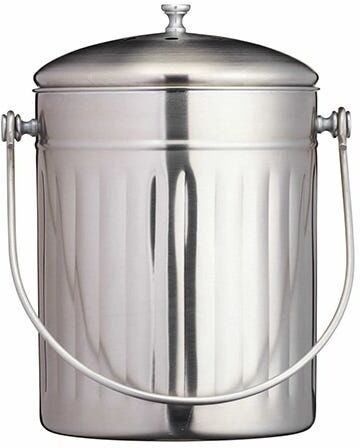
KitchenCraft Stainless Steel Compost BinEasily recycle and reduce your kitchen waste with this spacious, rust-resistant stainless steel worktop composter with an integral odour absorbing carbon filter. Perfect for composting teabags, egg shells, vegetable and fruit peelings directly from your worktop. When full, simply carry out to the compost heap.31,19 £*Shipping: 3,50 £Secure redirect to the provider
-
Cozy Casa Charm Compost Bin With Lid, Includes Spare Charcoal Filter, Utopia KitchenvCountertop Compost Pail blackIntroducing the Compost Bin with Lid and 1.3Gallon capacity, complete with a Spare Charcoal Filter from Utopia Kitchen, your ideal countertop companion for ecofriendly kitchen waste management. Designed for commercial intent, this compost pail...75,97 $*Shipping: 0,00 $Secure redirect to the provider

-
Do you sieve the usable compost or shred the compost before composting?
It is generally recommended to shred the compost materials before composting, as this helps to speed up the decomposition process and create a more uniform compost. Shredding the materials increases the surface area for microorganisms to work on, which accelerates the breakdown of the organic matter. Sieving the compost may also be necessary to remove any large, undecomposed materials before using the compost in the garden. Both shredding and sieving can help create a higher quality, more consistent compost for use in gardening. **
-
How can compost be improved?
Compost can be improved by ensuring a proper balance of green and brown materials, such as kitchen scraps and yard waste. Turning the compost regularly to aerate it and speed up decomposition can also help improve the quality of the compost. Adding a compost activator or accelerator can introduce beneficial microorganisms to the compost pile, further enhancing the decomposition process. Lastly, monitoring the moisture levels of the compost and adjusting as needed can help create a more optimal environment for decomposition. **
-
Are mice harmful in compost?
Mice can be harmful in compost because they may dig tunnels and create nests, disrupting the decomposition process. Additionally, they may consume the organic materials in the compost, reducing its effectiveness. To prevent mice from being attracted to the compost, it's important to avoid adding meat, dairy, and oily foods, and to regularly turn the compost to discourage nesting. Using a closed compost bin can also help to keep mice out. **
-
What is in the compost?
Compost is made up of organic materials such as kitchen scraps (fruit and vegetable peels, coffee grounds, eggshells), yard waste (grass clippings, leaves, small branches), and other biodegradable materials. These materials are broken down by microorganisms and turned into nutrient-rich soil that can be used to improve the health and fertility of garden soil. Compost also contains a variety of beneficial microorganisms and earthworms that help to further break down the organic matter and improve soil structure. **


Are rats harmful in compost?
Rats can be harmful in compost because they are attracted to the food scraps and organic materials in the compost pile. They can disturb the compost pile, spread diseases, and create a nuisance in the surrounding area. To prevent rats from being attracted to the compost, it's important to properly manage the compost pile by regularly turning it, covering food scraps with a layer of brown materials, and avoiding adding meat, dairy, and oily foods to the compost. Additionally, using a rodent-proof compost bin can help prevent rats from accessing the compost pile. **
Why does stool smell like compost?
Stool can smell like compost due to the presence of bacteria in the digestive system that break down food particles and produce gases like methane and hydrogen sulfide. These gases, along with the breakdown of organic matter in the stool, can create a smell similar to that of compost. Additionally, the presence of undigested food particles in the stool can contribute to the compost-like odor. **
Top-Angebote
Products related to Compost:
-
HQ Smart Sex: A Self-Help Guide to Fun, Pleasure and Relationships - Non Fiction - PaperbackTitle:. Smart Sex: A Self-Help Guide to Fun, Pleasure and Relationships - Non Fiction - Paperback Format: Paperback Overview:. Smart Sex: A Self-Help Guide to Fun, Pleasure and Relationships is a practical, compassionate guide designed to help adults reclaim joy and confidence in their intimate life. In a warm, non-judgmental voice, this paperback edition offers straightforward strategies to boost fun, deepen connection, and improve relationships—whether you’re navigating dating, committed partnerships, or solo exploration. The book covers communication, consent, boundaries, and self-awareness, with actionable exercises, conversation starters, and reflective prompts. Readers will discover how to articulate desires, set healthy expectations, and explore pleasure in a respectful, safe way. The author blends psychology, real-world scenarios, and inclusive language to help readers feel seen and supported. The structure is accessible for beginners but insightful for those who have already started their journey, with practical tips you can try tonight. By focusing on pleasure as a component of well-being, the book reframes sex as something to be enjoyed, celebrated, and integrated into daily life. This edition’s paperback format makes it easy to carry, annotate, and revisit chapters on the commute, at home, or during a quiet moment of self-reflection. If you’ve been searching for a practical, uplifting guide to dating, intimacy, and relationships, Smart Sex is your friendly, reliable companion. What Makes This Book Stand Out:. Unlike many self-help titles, Smart Sex speaks in a warm, accessible tone that invites readers to experiment with ideas in real life. It pairs clear, actionable steps with compassionate guidance, so you can move from intention to action without feeling overwhelmed. You’ll find practical exercises to improve communication, confidence, and consent, including conversation starters tailored for initial dating, couple check-ins, and solo exploration. The book emphasizes consent, respect, and emotional safety while encouraging readers to explore pleasure as a natural, healthy part of life. Its inclusive language makes it welcoming for readers of all orientations and experiences, and it uses real-world scenarios to illustrate how small daily choices can strengthen trust and intimacy. The writing is concise but never preachy, offering a repeatable framework you can return to whenever you want to refresh your approach to sex and relationships. Who This Book Is Perfect For:. This book is for adults who want to enrich their love lives, whether dating, in a long-term relationship, or navigating new territory on their own. It's ideal for readers seeking practical, down-to-earth guidance on communication, boundaries, and pleasure. If you’re looking for a no-nonsense, empathetic self-help resource that respects diversity and personal pace, this paperback is for you. Gift buyers and classroom-style readers alike will appreciate its approachable...10,99 £*Shipping: 2,99 £Secure redirect to the provider
-
KitchenCraft Stainless Steel Compost BinEasily recycle and reduce your kitchen waste with this spacious, rust-resistant stainless steel worktop composter with an integral odour absorbing carbon filter. Perfect for composting teabags, egg shells, vegetable and fruit peelings directly from your worktop. When full, simply carry out to the compost heap.31,19 £*Shipping: 3,50 £Secure redirect to the provider
-
What is the difference between industrial compost and household compost?
Industrial composting is a large-scale process that involves composting organic waste from various sources, such as food processing plants, agricultural operations, and municipal green waste. It is typically done in a controlled environment with specialized equipment to efficiently break down the organic material. On the other hand, household composting is a smaller-scale process that involves composting organic waste generated in a home, such as food scraps, yard trimmings, and paper products. It is usually done in a backyard compost bin or pile, using natural decomposition processes. The main difference between the two is the scale and the level of control and management involved in the composting process. **
-
Does compost produce mold?
Yes, compost can produce mold. Mold is a type of fungus that thrives in moist and organic environments, making compost an ideal breeding ground for mold. However, having mold in compost is not necessarily a bad thing, as it helps with the decomposition process. As long as the compost is properly aerated and turned regularly, the mold should not become a problem. **
-
Do you sieve the usable compost or shred the compost before composting?
It is generally recommended to shred the compost materials before composting, as this helps to speed up the decomposition process and create a more uniform compost. Shredding the materials increases the surface area for microorganisms to work on, which accelerates the breakdown of the organic matter. Sieving the compost may also be necessary to remove any large, undecomposed materials before using the compost in the garden. Both shredding and sieving can help create a higher quality, more consistent compost for use in gardening. **
-
How can compost be improved?
Compost can be improved by ensuring a proper balance of green and brown materials, such as kitchen scraps and yard waste. Turning the compost regularly to aerate it and speed up decomposition can also help improve the quality of the compost. Adding a compost activator or accelerator can introduce beneficial microorganisms to the compost pile, further enhancing the decomposition process. Lastly, monitoring the moisture levels of the compost and adjusting as needed can help create a more optimal environment for decomposition. **
Similar search terms for Compost
-
Cozy Casa Charm Compost Bin With Lid, Includes Spare Charcoal Filter, Utopia KitchenvCountertop Compost Pail blackIntroducing the Compost Bin with Lid and 1.3Gallon capacity, complete with a Spare Charcoal Filter from Utopia Kitchen, your ideal countertop companion for ecofriendly kitchen waste management. Designed for commercial intent, this compost pail...75,97 $*Shipping: 0,00 $Secure redirect to the provider
-
Cozy Casa Charm Compost Bin With Lid, Includes Spare Charcoal Filter, Utopia KitchenvCountertop Compost Pail goldIntroducing the Compost Bin with Lid and 1.3Gallon capacity, complete with a Spare Charcoal Filter from Utopia Kitchen, your ideal countertop companion for ecofriendly kitchen waste management. Designed for commercial intent, this compost pail...75,97 $*Shipping: 0,00 $Secure redirect to the provider
-
Cozy Casa Charm Compost Bin With Lid, Includes Spare Charcoal Filter, Utopia KitchenvCountertop Compost Pail bronzeIntroducing the Compost Bin with Lid and 1.3Gallon capacity, complete with a Spare Charcoal Filter from Utopia Kitchen, your ideal countertop companion for ecofriendly kitchen waste management. Designed for commercial intent, this compost pail...75,97 $*Shipping: 0,00 $Secure redirect to the provider
-
Are mice harmful in compost?
Mice can be harmful in compost because they may dig tunnels and create nests, disrupting the decomposition process. Additionally, they may consume the organic materials in the compost, reducing its effectiveness. To prevent mice from being attracted to the compost, it's important to avoid adding meat, dairy, and oily foods, and to regularly turn the compost to discourage nesting. Using a closed compost bin can also help to keep mice out. **
-
What is in the compost?
Compost is made up of organic materials such as kitchen scraps (fruit and vegetable peels, coffee grounds, eggshells), yard waste (grass clippings, leaves, small branches), and other biodegradable materials. These materials are broken down by microorganisms and turned into nutrient-rich soil that can be used to improve the health and fertility of garden soil. Compost also contains a variety of beneficial microorganisms and earthworms that help to further break down the organic matter and improve soil structure. **
-
Are rats harmful in compost?
Rats can be harmful in compost because they are attracted to the food scraps and organic materials in the compost pile. They can disturb the compost pile, spread diseases, and create a nuisance in the surrounding area. To prevent rats from being attracted to the compost, it's important to properly manage the compost pile by regularly turning it, covering food scraps with a layer of brown materials, and avoiding adding meat, dairy, and oily foods to the compost. Additionally, using a rodent-proof compost bin can help prevent rats from accessing the compost pile. **
-
Why does stool smell like compost?
Stool can smell like compost due to the presence of bacteria in the digestive system that break down food particles and produce gases like methane and hydrogen sulfide. These gases, along with the breakdown of organic matter in the stool, can create a smell similar to that of compost. Additionally, the presence of undigested food particles in the stool can contribute to the compost-like odor. **
* All prices are inclusive of VAT and, if applicable, plus shipping costs. The offer information is based on the details provided by the respective shop and is updated through automated processes. Real-time updates do not occur, so deviations can occur in individual cases. ** Note: Parts of this content were created by AI.