Buy sex-community.net ?
We are moving the project
sex-community.net .
Are you interested in purchasing the domain
sex-community.net ?
domain@kv-gmbh.de · 0541-91531010
Buy sex-community.net ?
How is equity calculated?
Equity is calculated by subtracting the total liabilities of a company from its total assets. In other words, equity represents the ownership interest in a company's assets after all debts and obligations have been paid off. It is a measure of the company's net worth and is often used by investors and analysts to assess the financial health and value of a company. Equity can also be calculated for individuals by subtracting their total liabilities (such as mortgages, loans, and credit card debt) from their total assets (such as savings, investments, and property). **
What is equity capital?
Equity capital refers to the funds that a company raises by selling shares of ownership in the business. These shares represent ownership in the company and entitle the shareholders to a portion of the company's profits and a say in its decision-making processes. Equity capital is a crucial source of long-term funding for a company and can be raised through the sale of common stock or preferred stock. Unlike debt capital, equity capital does not need to be repaid and does not accrue interest, but it does dilute the ownership stake of existing shareholders. **


Similar search terms for Equity
Top-Angebote
Products related to Equity:
-
Authors Equity Superagency: What Could Possibly Go Right With Our AI Future - Non Fiction - PaperbackTitle:. Superagency: What Could Possibly Go Right With Our AI Future Format: Paperback Overview:. In Superagency, Reid Hoffman and journalist Greg Beato offer a bold, human-centered vision of an AI-powered future. This accessible non-fiction work reframes the conversation around artificial intelligence—from fear-based headlines to a practical playbook for expanding human agency in the workplace, in governance, and in everyday decision-making. The authors argue that AI can augment our capabilities, not replace them, and they map a road to responsible, creative collaboration between people and machines. The book blends real-world business insight with thoughtful ethical considerations, delivering clear strategies for leaders, teams, and curious readers who want to participate in shaping a positive trajectory. Designed for non-technical audiences as well as seasoned tech watchers, it explains concepts with tangible examples, case studies, and actionable steps that readers can apply immediately. If you’re seeking a hopeful yet grounded take on how AI can amplify opportunity—without surrendering control—this paperback guides you toward a more confident, proactive relationship with technology. A timely read for entrepreneurs, policy-makers, educators, and everyday readers who want to understand what could go right—and how to make it so. What Makes This Book Stand Out:. Superagency stands out by presenting a constructive, agency-forward narrative at a moment when many AI books focus on risk or hype. Hoffman’s credibility as a tech entrepreneur and LinkedIn co‑founder, paired with Beato’s nuanced reporting, yields a balanced, practical blueprint rather than speculative hype. The authors illuminate how individuals and organizations can harness AI to enhance decision-making, creativity, and collaboration, offering concrete frameworks, decision trees, and leadership guidance that readers can translate into real-world action. It’s non-technical in tone but deliberately aspirational, inviting readers to participate in shaping a future where human ingenuity partners with intelligent systems. The book’s emphasis on governance, ethics, and responsible deployment adds depth, making it a compelling choice for readers who want both inspiration and implementable strategies. Who This Book Is Perfect For:. This paperback is ideal for startup founders, business leaders, managers, and teams exploring AI adoption without needing a coding background. It also appeals to policy makers, educators, and students curious about how AI can augment human work rather than erode it. Readers seeking a hopeful, action-oriented take on technology will appreciate the practical guidance, clear language, and accessible examples. If you’re the kind of reader who devours business books, leadership playbooks, or tech-focused non-fiction that translates high-level ideas into everyday decisions, this title will resonate. It also makes a thoughtful gift for colleagues, mentors, or graduates who...22,00 £*Shipping: 2,99 £Secure redirect to the provider
-
Authors Equity The Simple Path to Wealth: Your Road Map to Financial Independence and a Rich, Free Life by J L CollinsWhat if the path to wealth isn't about timing the market or picking hot stocks, or even about paying someone else to do it for you? What if it’s actually about following a radically simple plan that’s not only easier to implement, but also more lucrative than the alternatives? Drawing from fifty years of investing experience, and born out of a series of letters the author wrote to his daughter, The Simple Path to Wealth has become foundational to the FIRE (Financial Independence, Retire Early) movement, inspiring hundreds of thousands of readers to reimagine their relationship with money and freedom. The real-world success of Collins' approach is documented in Pathfinders, his collection of stories from readers who have transformed their financial lives using his method. Whether you care deeply about money, or never want to think about it at all, you’re living in a culture of spending. Everyone’s telling you that handing over your cash for this gadget, this potion, this lifestyle is the key to happiness. Meanwhile, the reality is that happiness is more likely to come from having the financial freedom to live the life you really want. Whatever your relationship with money, you will be heartened by Collins’ essential insight, which is that simplicity beats complexity every time. This comprehensive guide covers everything from debt elimination to optimizing retirement accounts, all while exposing the marketing myths and investment industry practices that keep most people from building real wealth. Collins shares specific, actionable strategies for both wealth-building and wealth-preservation phases, with a straightforward approach to asset allocation that anyone can implement. Collins' direct, often irreverent style makes complex financial concepts crystal clear, giving readers the tools and confidence to take control of their financial future. More than just another investment book, The Simple Path to Wealth is a blueprint for financial independence – showing readers how to break free from the financial industry’s traps and live life on their own terms.12,99 £*Shipping: 2,99 £Secure redirect to the provider
-
Rupa Publications Swipe Smart: Dating In The Age of Red Flags and Green Flags by David Keane - Paperback Dating & Relationships Guide - UK EditionA sharp, funny, and refreshingly honest guide to modern dating, written for anyone who has ever swiped, ghosted, or been ghosted. David Keane blends humour with genuine insight, helping readers spot red flags before they become heartbreak and recognise green flags worth pursuing. Part relationship guide, part comic survival manual, this book is for every single person navigating dating apps. Dating in the digital age can be confusing, and this book cuts through the noise with wit, warmth, and no-nonsense advice. David Keane understands that the thrill of a new match can quickly curdle into disappointment, and this book is his playbook for telling the difference between a spark worth chasing and a warning sign worth heeding. Written by David Keane and published by Rupa Publications India, this book is a must-read for anyone looking to navigate the complexities of modern dating.2,99 £*Shipping: 2,99 £Secure redirect to the provider
-
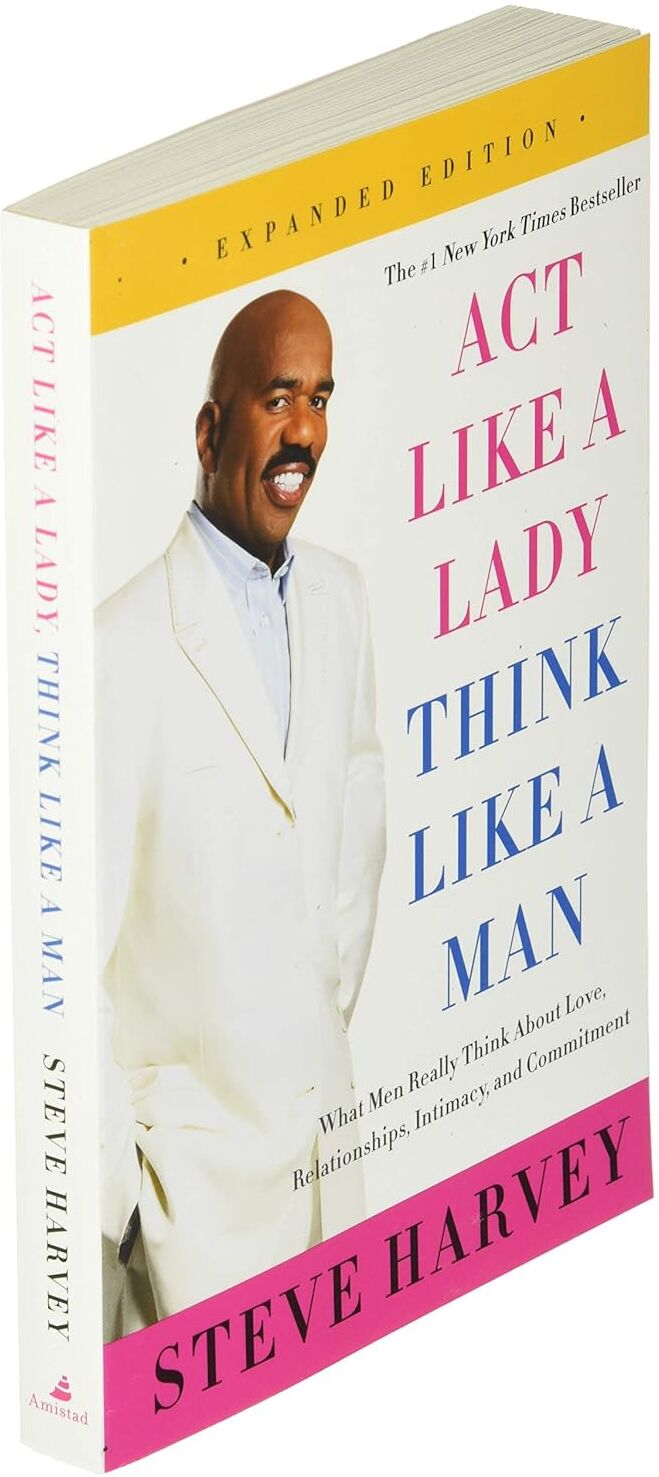
Amistad Act Like a Lady, Think Like a Man, Expanded Edition: What Men Really Think About Love, Relationships, Intimacy, and CommitmentThe #1 New York Times smash bestseller Revised and expanded with new material. With over two million copies sold, Act Like a Lady, Think Like a Man has become a bestseller around the world. In conjunction with its second movie sequel to be released this summer, Steve Harvey has updated his classic with new advice and insights. Whether it’s why women should enforce a “90-Day Probation Period” before they give their men sexual “benefits”―the way Ford motor company withholds medical and dental benefits until an employee has been on the job for 3 months―or explaining to women why men would rather “fix it” than talk about it, Steve Harvey’s advice is always spot-on and laden with warmth and humor. But behind the laughter is his sincere desire to help women understand how men think. Now, Steve shares even more practical dating advice. Does it feel like your man’s friends are against you? What should you know about being a wife, before you say “I Do”? Steve provides the answers to these questions and more, and offers new insights including: How to put spice into your relationship 8 sure-fire ways to keep your cool when his “ex” shows up A test for you and your partner, to see if you’re actually ready for marriage. . . or need more time A 90-day abstinence calendar, and tips for making it through this important trial period With liberal use of his own adventures in love and courtship, Act Like a Lady, Think Like a Man is an honest, compelling, and realistic examination of how men think about love and relationships, and what women need to know so that they can set realistic expectations of the men in their life.4,90 £*Shipping: 1,99 £Secure redirect to the provider


-
'Equity type or legal type?'
Equity type refers to the ownership structure of a company, indicating whether it is publicly traded or privately held. Legal type, on the other hand, refers to the legal structure of a business entity, such as a corporation, partnership, or sole proprietorship. While equity type focuses on ownership, legal type is concerned with the legal rights and responsibilities of the entity. Both equity type and legal type are important considerations when determining the structure and governance of a business. **
-
What is the accumulated equity?
The accumulated equity is the total value of an asset after subtracting any liabilities or debts associated with it. It represents the ownership interest or value that an individual or entity has in the asset. Accumulated equity can increase over time as the asset appreciates in value or as debts are paid off, resulting in a higher net worth for the owner. It is an important measure of financial health and can be used to determine the overall value of an investment or property. **
-
How can one improve equity?
One can improve equity by addressing systemic barriers and biases that contribute to inequality. This can be achieved through policies and practices that promote equal access to opportunities, resources, and representation for all individuals, regardless of their background. Additionally, promoting diversity and inclusion in all aspects of society can help to create a more equitable environment. It is also important to actively listen to and amplify the voices of marginalized communities in decision-making processes. **
-
How do you calculate equity?
Equity is calculated by subtracting the total liabilities of a company from its total assets. The formula for calculating equity is: Equity = Total Assets - Total Liabilities. This calculation gives a measure of the ownership interest in a company, representing the residual value of the assets after all debts and liabilities have been paid off. Equity is an important financial metric that is used to assess the financial health and stability of a company. **

How does depreciation affect equity?
Depreciation reduces the value of assets on the balance sheet, which in turn reduces the overall equity of the company. This is because equity is calculated as the difference between a company's assets and liabilities. As the value of assets decreases due to depreciation, the overall equity of the company also decreases. This can impact the financial health of the company and its ability to attract investors or secure financing. **
What is the difference between equal opportunities, equity of opportunity, and equity of achievement?
Equal opportunities refers to the idea that everyone should have the same access to opportunities, resources, and rights regardless of their background or circumstances. Equity of opportunity goes a step further, aiming to ensure that everyone has the support and resources they need to have an equal chance of success, taking into account individual differences and barriers. Equity of achievement focuses on ensuring that everyone has the same chance of achieving success, regardless of their starting point, and aims to address and eliminate disparities in outcomes. In summary, while equal opportunities focuses on access, equity of opportunity and equity of achievement focus on addressing and eliminating disparities in support and outcomes. **
Top-Angebote
Products related to Equity:
-
HQ Smart Sex: A Self-Help Guide to Fun, Pleasure and Relationships - Non Fiction - PaperbackTitle:. Smart Sex: A Self-Help Guide to Fun, Pleasure and Relationships - Non Fiction - Paperback Format: Paperback Overview:. Smart Sex: A Self-Help Guide to Fun, Pleasure and Relationships is a practical, compassionate guide designed to help adults reclaim joy and confidence in their intimate life. In a warm, non-judgmental voice, this paperback edition offers straightforward strategies to boost fun, deepen connection, and improve relationships—whether you’re navigating dating, committed partnerships, or solo exploration. The book covers communication, consent, boundaries, and self-awareness, with actionable exercises, conversation starters, and reflective prompts. Readers will discover how to articulate desires, set healthy expectations, and explore pleasure in a respectful, safe way. The author blends psychology, real-world scenarios, and inclusive language to help readers feel seen and supported. The structure is accessible for beginners but insightful for those who have already started their journey, with practical tips you can try tonight. By focusing on pleasure as a component of well-being, the book reframes sex as something to be enjoyed, celebrated, and integrated into daily life. This edition’s paperback format makes it easy to carry, annotate, and revisit chapters on the commute, at home, or during a quiet moment of self-reflection. If you’ve been searching for a practical, uplifting guide to dating, intimacy, and relationships, Smart Sex is your friendly, reliable companion. What Makes This Book Stand Out:. Unlike many self-help titles, Smart Sex speaks in a warm, accessible tone that invites readers to experiment with ideas in real life. It pairs clear, actionable steps with compassionate guidance, so you can move from intention to action without feeling overwhelmed. You’ll find practical exercises to improve communication, confidence, and consent, including conversation starters tailored for initial dating, couple check-ins, and solo exploration. The book emphasizes consent, respect, and emotional safety while encouraging readers to explore pleasure as a natural, healthy part of life. Its inclusive language makes it welcoming for readers of all orientations and experiences, and it uses real-world scenarios to illustrate how small daily choices can strengthen trust and intimacy. The writing is concise but never preachy, offering a repeatable framework you can return to whenever you want to refresh your approach to sex and relationships. Who This Book Is Perfect For:. This book is for adults who want to enrich their love lives, whether dating, in a long-term relationship, or navigating new territory on their own. It's ideal for readers seeking practical, down-to-earth guidance on communication, boundaries, and pleasure. If you’re looking for a no-nonsense, empathetic self-help resource that respects diversity and personal pace, this paperback is for you. Gift buyers and classroom-style readers alike will appreciate its approachable...10,99 £*Shipping: 2,99 £Secure redirect to the provider
-
Authors Equity Superagency: What Could Possibly Go Right With Our AI Future - Non Fiction - PaperbackTitle:. Superagency: What Could Possibly Go Right With Our AI Future Format: Paperback Overview:. In Superagency, Reid Hoffman and journalist Greg Beato offer a bold, human-centered vision of an AI-powered future. This accessible non-fiction work reframes the conversation around artificial intelligence—from fear-based headlines to a practical playbook for expanding human agency in the workplace, in governance, and in everyday decision-making. The authors argue that AI can augment our capabilities, not replace them, and they map a road to responsible, creative collaboration between people and machines. The book blends real-world business insight with thoughtful ethical considerations, delivering clear strategies for leaders, teams, and curious readers who want to participate in shaping a positive trajectory. Designed for non-technical audiences as well as seasoned tech watchers, it explains concepts with tangible examples, case studies, and actionable steps that readers can apply immediately. If you’re seeking a hopeful yet grounded take on how AI can amplify opportunity—without surrendering control—this paperback guides you toward a more confident, proactive relationship with technology. A timely read for entrepreneurs, policy-makers, educators, and everyday readers who want to understand what could go right—and how to make it so. What Makes This Book Stand Out:. Superagency stands out by presenting a constructive, agency-forward narrative at a moment when many AI books focus on risk or hype. Hoffman’s credibility as a tech entrepreneur and LinkedIn co‑founder, paired with Beato’s nuanced reporting, yields a balanced, practical blueprint rather than speculative hype. The authors illuminate how individuals and organizations can harness AI to enhance decision-making, creativity, and collaboration, offering concrete frameworks, decision trees, and leadership guidance that readers can translate into real-world action. It’s non-technical in tone but deliberately aspirational, inviting readers to participate in shaping a future where human ingenuity partners with intelligent systems. The book’s emphasis on governance, ethics, and responsible deployment adds depth, making it a compelling choice for readers who want both inspiration and implementable strategies. Who This Book Is Perfect For:. This paperback is ideal for startup founders, business leaders, managers, and teams exploring AI adoption without needing a coding background. It also appeals to policy makers, educators, and students curious about how AI can augment human work rather than erode it. Readers seeking a hopeful, action-oriented take on technology will appreciate the practical guidance, clear language, and accessible examples. If you’re the kind of reader who devours business books, leadership playbooks, or tech-focused non-fiction that translates high-level ideas into everyday decisions, this title will resonate. It also makes a thoughtful gift for colleagues, mentors, or graduates who...22,00 £*Shipping: 2,99 £Secure redirect to the provider
-
Authors Equity The Simple Path to Wealth: Your Road Map to Financial Independence and a Rich, Free Life by J L CollinsWhat if the path to wealth isn't about timing the market or picking hot stocks, or even about paying someone else to do it for you? What if it’s actually about following a radically simple plan that’s not only easier to implement, but also more lucrative than the alternatives? Drawing from fifty years of investing experience, and born out of a series of letters the author wrote to his daughter, The Simple Path to Wealth has become foundational to the FIRE (Financial Independence, Retire Early) movement, inspiring hundreds of thousands of readers to reimagine their relationship with money and freedom. The real-world success of Collins' approach is documented in Pathfinders, his collection of stories from readers who have transformed their financial lives using his method. Whether you care deeply about money, or never want to think about it at all, you’re living in a culture of spending. Everyone’s telling you that handing over your cash for this gadget, this potion, this lifestyle is the key to happiness. Meanwhile, the reality is that happiness is more likely to come from having the financial freedom to live the life you really want. Whatever your relationship with money, you will be heartened by Collins’ essential insight, which is that simplicity beats complexity every time. This comprehensive guide covers everything from debt elimination to optimizing retirement accounts, all while exposing the marketing myths and investment industry practices that keep most people from building real wealth. Collins shares specific, actionable strategies for both wealth-building and wealth-preservation phases, with a straightforward approach to asset allocation that anyone can implement. Collins' direct, often irreverent style makes complex financial concepts crystal clear, giving readers the tools and confidence to take control of their financial future. More than just another investment book, The Simple Path to Wealth is a blueprint for financial independence – showing readers how to break free from the financial industry’s traps and live life on their own terms.12,99 £*Shipping: 2,99 £Secure redirect to the provider
-
How is equity calculated?
Equity is calculated by subtracting the total liabilities of a company from its total assets. In other words, equity represents the ownership interest in a company's assets after all debts and obligations have been paid off. It is a measure of the company's net worth and is often used by investors and analysts to assess the financial health and value of a company. Equity can also be calculated for individuals by subtracting their total liabilities (such as mortgages, loans, and credit card debt) from their total assets (such as savings, investments, and property). **
-
What is equity capital?
Equity capital refers to the funds that a company raises by selling shares of ownership in the business. These shares represent ownership in the company and entitle the shareholders to a portion of the company's profits and a say in its decision-making processes. Equity capital is a crucial source of long-term funding for a company and can be raised through the sale of common stock or preferred stock. Unlike debt capital, equity capital does not need to be repaid and does not accrue interest, but it does dilute the ownership stake of existing shareholders. **
-
'Equity type or legal type?'
Equity type refers to the ownership structure of a company, indicating whether it is publicly traded or privately held. Legal type, on the other hand, refers to the legal structure of a business entity, such as a corporation, partnership, or sole proprietorship. While equity type focuses on ownership, legal type is concerned with the legal rights and responsibilities of the entity. Both equity type and legal type are important considerations when determining the structure and governance of a business. **
-
What is the accumulated equity?
The accumulated equity is the total value of an asset after subtracting any liabilities or debts associated with it. It represents the ownership interest or value that an individual or entity has in the asset. Accumulated equity can increase over time as the asset appreciates in value or as debts are paid off, resulting in a higher net worth for the owner. It is an important measure of financial health and can be used to determine the overall value of an investment or property. **
Similar search terms for Equity
-
Rupa Publications Swipe Smart: Dating In The Age of Red Flags and Green Flags by David Keane - Paperback Dating & Relationships Guide - UK EditionA sharp, funny, and refreshingly honest guide to modern dating, written for anyone who has ever swiped, ghosted, or been ghosted. David Keane blends humour with genuine insight, helping readers spot red flags before they become heartbreak and recognise green flags worth pursuing. Part relationship guide, part comic survival manual, this book is for every single person navigating dating apps. Dating in the digital age can be confusing, and this book cuts through the noise with wit, warmth, and no-nonsense advice. David Keane understands that the thrill of a new match can quickly curdle into disappointment, and this book is his playbook for telling the difference between a spark worth chasing and a warning sign worth heeding. Written by David Keane and published by Rupa Publications India, this book is a must-read for anyone looking to navigate the complexities of modern dating.2,99 £*Shipping: 2,99 £Secure redirect to the provider
-
Amistad Act Like a Lady, Think Like a Man, Expanded Edition: What Men Really Think About Love, Relationships, Intimacy, and CommitmentThe #1 New York Times smash bestseller Revised and expanded with new material. With over two million copies sold, Act Like a Lady, Think Like a Man has become a bestseller around the world. In conjunction with its second movie sequel to be released this summer, Steve Harvey has updated his classic with new advice and insights. Whether it’s why women should enforce a “90-Day Probation Period” before they give their men sexual “benefits”―the way Ford motor company withholds medical and dental benefits until an employee has been on the job for 3 months―or explaining to women why men would rather “fix it” than talk about it, Steve Harvey’s advice is always spot-on and laden with warmth and humor. But behind the laughter is his sincere desire to help women understand how men think. Now, Steve shares even more practical dating advice. Does it feel like your man’s friends are against you? What should you know about being a wife, before you say “I Do”? Steve provides the answers to these questions and more, and offers new insights including: How to put spice into your relationship 8 sure-fire ways to keep your cool when his “ex” shows up A test for you and your partner, to see if you’re actually ready for marriage. . . or need more time A 90-day abstinence calendar, and tips for making it through this important trial period With liberal use of his own adventures in love and courtship, Act Like a Lady, Think Like a Man is an honest, compelling, and realistic examination of how men think about love and relationships, and what women need to know so that they can set realistic expectations of the men in their life.4,90 £*Shipping: 1,99 £Secure redirect to the provider
-
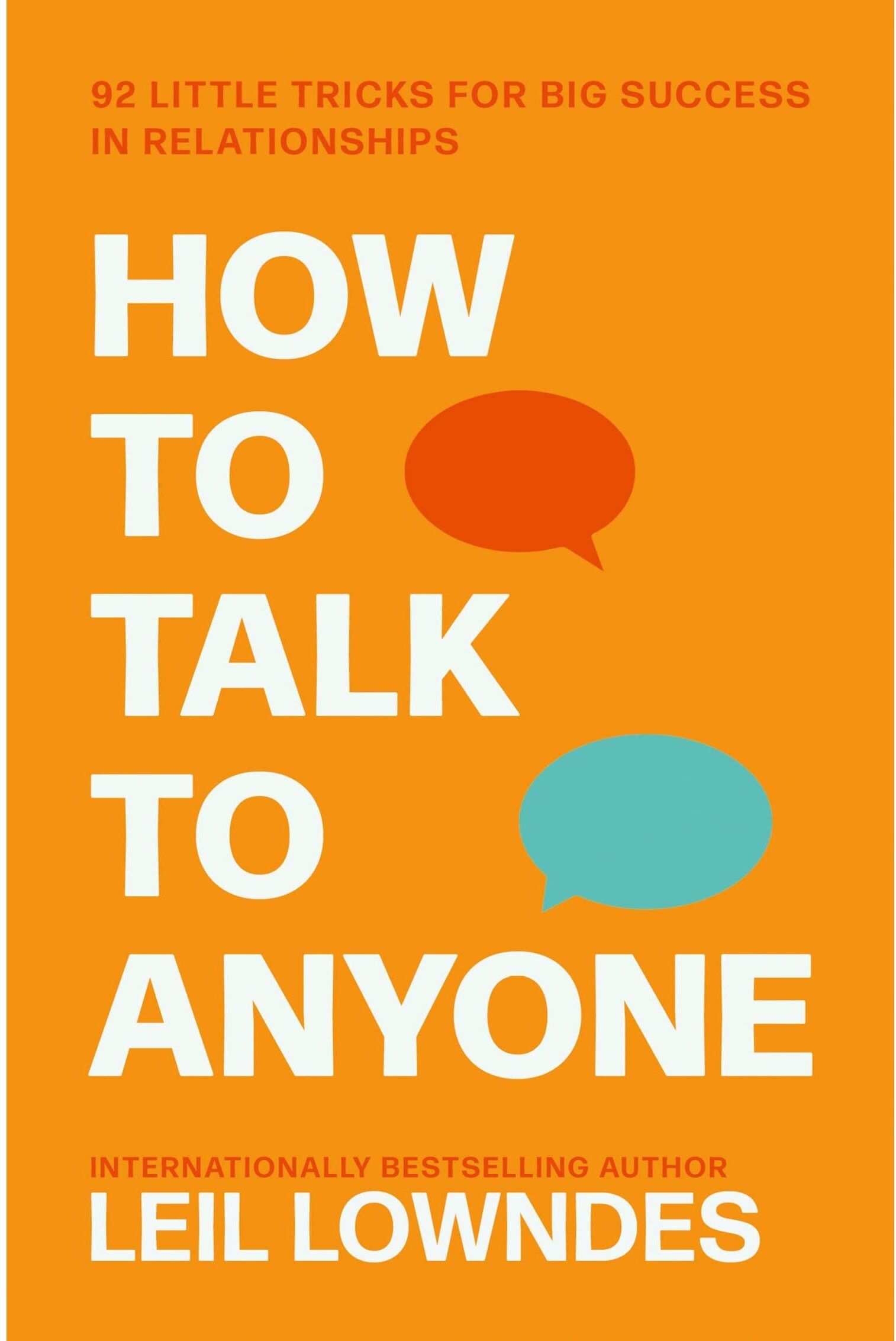
HARPERCOLLINS How to Talk to Anyone – 92 Little Tricks for Big Success in Relationships by Leil Lowndes Communication & Social Skills BestsellerMaster the art of confident communication. In How to Talk to Anyone: 92 Little Tricks for Big Success in Relationships, bestselling author and communication expert Leil Lowndes shares practical, easy-to-use techniques to help you connect with people in any situation. From networking events and job interviews to social gatherings and everyday conversations, this book shows you how to communicate with confidence, charisma, and impact. Packed with proven strategies on body language, first impressions, conversation starters, and listening skills, this timeless guide helps you overcome social anxiety, build rapport instantly, and leave a lasting impression. Whether you want to improve your personal relationships or advance your professional life, this book offers tools you can apply immediately. What You’ll Learn: How to start and end conversations effortlessly Secrets of confident body language and eye contact Techniques to build instant rapport and trust How to speak with authority and warmth Communication skills for work, dating, and social life A must-read for anyone looking to improve their social skills, networking ability, and personal confidence, How to Talk to Anyone is a classic self-help bestseller with lasting value.4,89 £*Shipping: 1,99 £Secure redirect to the provider
-
Harper Perennial Sex at Dawn: How We Mate, Why We Stray, and What It Means for Modern Relationships (P.S.)A controversial, idea-driven work of evolutionary psychology and anthropology that challenges everything you (think you) know about sex, monogamy, marriage, and family. In the words of Steve Taylor (The Fall, Waking From Sleep), Sex at Dawn is “a wonderfully provocative and well-written book which completely re-evaluates human sexual behavior and gets to the root of many of our social and psychological ills.” What if our struggles with monogamy, jealousy, and libido aren’t a personal failure, but an evolutionary mismatch? The Standard Narrative: A look at how the conventional story of human monogamy was built on flawed, outdated assumptions from the Victorian era. Primate Politics: Why our peaceful, hypersexual bonobo cousins may be a better model for our ancestral past than the violent, hierarchical chimpanzee. Foraging Societies: An exploration of our hunter-gatherer ancestors, who lived in fiercely egalitarian groups that shared food, child care, and even sexual partners. Sperm Competition: How human anatomy—from testis size to the female orgasm—points to a prehistory of multiple mating partners for both sexes. Modern Relationships: A new framework for understanding why passion fades, why so many struggle with monogamy, and what it means for our relationships today.5,99 £*Shipping: 2,99 £Secure redirect to the provider
-
How can one improve equity?
One can improve equity by addressing systemic barriers and biases that contribute to inequality. This can be achieved through policies and practices that promote equal access to opportunities, resources, and representation for all individuals, regardless of their background. Additionally, promoting diversity and inclusion in all aspects of society can help to create a more equitable environment. It is also important to actively listen to and amplify the voices of marginalized communities in decision-making processes. **
-
How do you calculate equity?
Equity is calculated by subtracting the total liabilities of a company from its total assets. The formula for calculating equity is: Equity = Total Assets - Total Liabilities. This calculation gives a measure of the ownership interest in a company, representing the residual value of the assets after all debts and liabilities have been paid off. Equity is an important financial metric that is used to assess the financial health and stability of a company. **
-
How does depreciation affect equity?
Depreciation reduces the value of assets on the balance sheet, which in turn reduces the overall equity of the company. This is because equity is calculated as the difference between a company's assets and liabilities. As the value of assets decreases due to depreciation, the overall equity of the company also decreases. This can impact the financial health of the company and its ability to attract investors or secure financing. **
-
What is the difference between equal opportunities, equity of opportunity, and equity of achievement?
Equal opportunities refers to the idea that everyone should have the same access to opportunities, resources, and rights regardless of their background or circumstances. Equity of opportunity goes a step further, aiming to ensure that everyone has the support and resources they need to have an equal chance of success, taking into account individual differences and barriers. Equity of achievement focuses on ensuring that everyone has the same chance of achieving success, regardless of their starting point, and aims to address and eliminate disparities in outcomes. In summary, while equal opportunities focuses on access, equity of opportunity and equity of achievement focus on addressing and eliminating disparities in support and outcomes. **
* All prices are inclusive of VAT and, if applicable, plus shipping costs. The offer information is based on the details provided by the respective shop and is updated through automated processes. Real-time updates do not occur, so deviations can occur in individual cases. ** Note: Parts of this content were created by AI.