Buy sex-community.net ?
We are moving the project
sex-community.net .
Are you interested in purchasing the domain
sex-community.net ?
domain@kv-gmbh.de · 0541-91531010
Buy sex-community.net ?
What are conjunctional clauses, relative clauses, demonstrative clauses, and infinitive clauses?
Conjunctional clauses are dependent clauses that are introduced by a conjunction, such as "because," "although," or "while." They provide additional information about the main clause in a sentence. Relative clauses are also dependent clauses that provide more information about a noun in the main clause. They are introduced by relative pronouns like "who," "which," or "that." Demonstrative clauses are dependent clauses that function as adjectives and provide more information about a noun in the main clause. They are introduced by demonstrative pronouns like "this," "that," "these," or "those." Infinitive clauses are dependent clauses that are formed with an infinitive verb (to + base form of the verb). They can function as nouns, adjectives, or adverbs in a sentence. **
Are conjunctive clauses always adverbial clauses?
No, conjunctive clauses are not always adverbial clauses. While adverbial clauses are a type of conjunctive clause that function as adverbs to modify verbs, adjectives, or other adverbs, there are also other types of conjunctive clauses. For example, there are conjunctive clauses that function as noun clauses, such as in "I know that you are busy." In this sentence, "that you are busy" is a conjunctive clause functioning as a noun clause, not an adverbial clause. Therefore, conjunctive clauses can serve various grammatical functions beyond just adverbial clauses. **


Similar search terms for Clauses
Top-Angebote
Products related to Clauses:
-
Enesco/Dept 56 More Letters for the Clauses African American Clothtique Red , RedEvery year, Mr. and Mrs. Claus are eager to receive and read More Letters for the Clauses. The red mailbox has holiday accents including holly leaves, red berries, and a red bow; it is filled with wrapped packages and rolled-up letters. This happy,...149,99 $*Shipping: 20,95 $Secure redirect to the provider
-
Rupa Publications Swipe Smart: Dating In The Age of Red Flags and Green Flags by David Keane - Paperback Dating & Relationships Guide - UK EditionA sharp, funny, and refreshingly honest guide to modern dating, written for anyone who has ever swiped, ghosted, or been ghosted. David Keane blends humour with genuine insight, helping readers spot red flags before they become heartbreak and recognise green flags worth pursuing. Part relationship guide, part comic survival manual, this book is for every single person navigating dating apps. Dating in the digital age can be confusing, and this book cuts through the noise with wit, warmth, and no-nonsense advice. David Keane understands that the thrill of a new match can quickly curdle into disappointment, and this book is his playbook for telling the difference between a spark worth chasing and a warning sign worth heeding. Written by David Keane and published by Rupa Publications India, this book is a must-read for anyone looking to navigate the complexities of modern dating.2,99 £*Shipping: 2,99 £Secure redirect to the provider
-
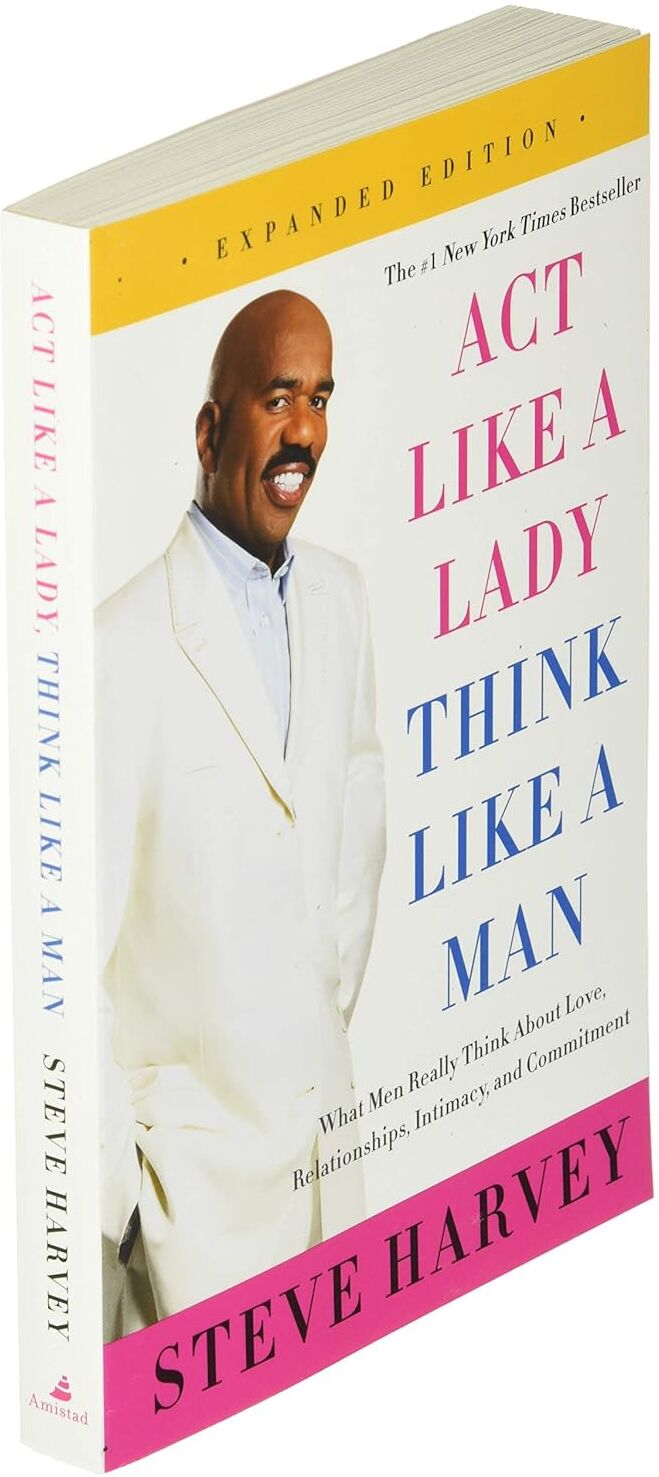
Amistad Act Like a Lady, Think Like a Man, Expanded Edition: What Men Really Think About Love, Relationships, Intimacy, and CommitmentThe #1 New York Times smash bestseller Revised and expanded with new material. With over two million copies sold, Act Like a Lady, Think Like a Man has become a bestseller around the world. In conjunction with its second movie sequel to be released this summer, Steve Harvey has updated his classic with new advice and insights. Whether it’s why women should enforce a “90-Day Probation Period” before they give their men sexual “benefits”―the way Ford motor company withholds medical and dental benefits until an employee has been on the job for 3 months―or explaining to women why men would rather “fix it” than talk about it, Steve Harvey’s advice is always spot-on and laden with warmth and humor. But behind the laughter is his sincere desire to help women understand how men think. Now, Steve shares even more practical dating advice. Does it feel like your man’s friends are against you? What should you know about being a wife, before you say “I Do”? Steve provides the answers to these questions and more, and offers new insights including: How to put spice into your relationship 8 sure-fire ways to keep your cool when his “ex” shows up A test for you and your partner, to see if you’re actually ready for marriage. . . or need more time A 90-day abstinence calendar, and tips for making it through this important trial period With liberal use of his own adventures in love and courtship, Act Like a Lady, Think Like a Man is an honest, compelling, and realistic examination of how men think about love and relationships, and what women need to know so that they can set realistic expectations of the men in their life.4,90 £*Shipping: 1,99 £Secure redirect to the provider
-
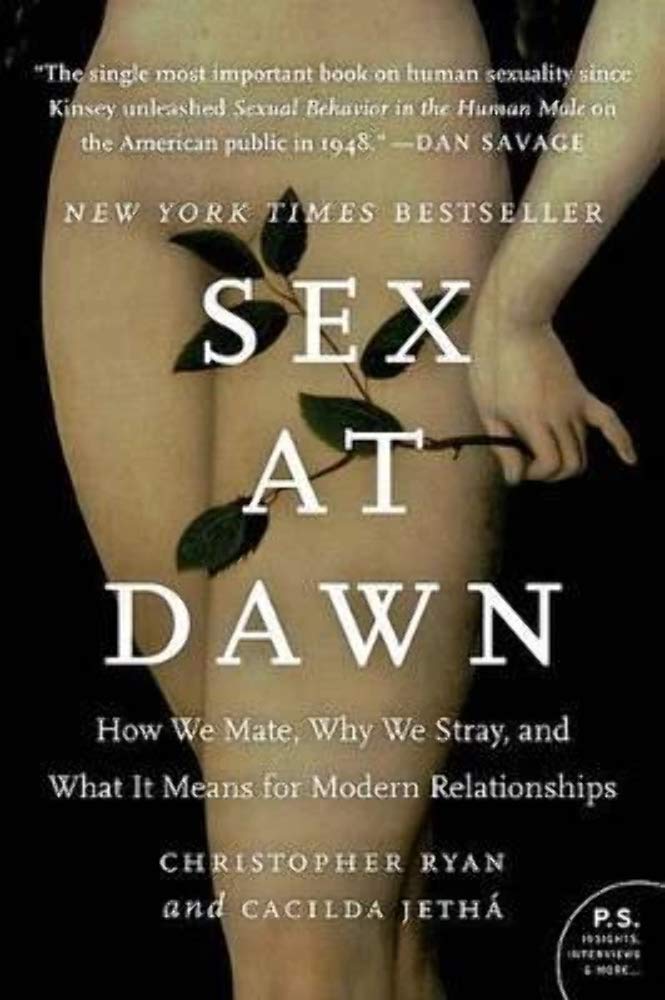
Harper Perennial Sex at Dawn: How We Mate, Why We Stray, and What It Means for Modern Relationships (P.S.)A controversial, idea-driven work of evolutionary psychology and anthropology that challenges everything you (think you) know about sex, monogamy, marriage, and family. In the words of Steve Taylor (The Fall, Waking From Sleep), Sex at Dawn is “a wonderfully provocative and well-written book which completely re-evaluates human sexual behavior and gets to the root of many of our social and psychological ills.” What if our struggles with monogamy, jealousy, and libido aren’t a personal failure, but an evolutionary mismatch? The Standard Narrative: A look at how the conventional story of human monogamy was built on flawed, outdated assumptions from the Victorian era. Primate Politics: Why our peaceful, hypersexual bonobo cousins may be a better model for our ancestral past than the violent, hierarchical chimpanzee. Foraging Societies: An exploration of our hunter-gatherer ancestors, who lived in fiercely egalitarian groups that shared food, child care, and even sexual partners. Sperm Competition: How human anatomy—from testis size to the female orgasm—points to a prehistory of multiple mating partners for both sexes. Modern Relationships: A new framework for understanding why passion fades, why so many struggle with monogamy, and what it means for our relationships today.5,99 £*Shipping: 2,99 £Secure redirect to the provider


-
What are relative clauses and conjunctional clauses?
Relative clauses are clauses that provide additional information about a noun in the main clause. They are introduced by relative pronouns such as "who," "which," "that," and "whom." For example, in the sentence "The book that I read is very interesting," the relative clause "that I read" provides more information about the noun "book." Conjunctional clauses, on the other hand, are clauses that are connected to the main clause by conjunctions such as "and," "but," "or," "if," and "because." They can express relationships such as addition, contrast, alternative, condition, and cause. For example, in the sentence "I will go to the park if the weather is nice," the conjunctional clause "if the weather is nice" expresses a condition for the action in the main clause. **
-
What are the French conditional clauses (si-clauses)?
French conditional clauses, also known as si-clauses, are used to express a hypothetical situation and its potential outcome. They consist of two parts: the si clause (if clause), which describes the condition, and the main clause, which describes the potential result. The si clause is typically formed using the conjunction "si" followed by the imperfect tense or the pluperfect tense, while the main clause is formed using the conditional tense. These clauses are commonly used to talk about what would happen in certain situations if a specific condition were met. **
-
How can one recognize main clauses and subordinate clauses?
Main clauses can stand alone as complete sentences, while subordinate clauses cannot. Subordinate clauses often begin with subordinating conjunctions such as "although," "because," "if," "when," or "while." They also often contain a subject and a verb, but they do not express a complete thought on their own. Main clauses, on the other hand, express a complete thought and can function as independent sentences. By identifying these characteristics, one can recognize main and subordinate clauses in a sentence. **
-
How can subordinate clauses be rewritten as main clauses?
Subordinate clauses can be rewritten as main clauses by removing the subordinating conjunction and making any necessary adjustments to the verb tense or word order. For example, the subordinate clause "because she was tired" can be rewritten as the main clause "she was tired." This transformation allows the subordinate clause to stand alone as a complete sentence. Additionally, any pronouns or other words that were dependent on the subordinating conjunction may need to be adjusted to ensure the new main clause is grammatically correct. **

How can adverbial clauses be used as subordinate clauses?
Adverbial clauses can be used as subordinate clauses to provide additional information about the main clause. They can modify the verb in the main clause by expressing time, place, manner, condition, reason, purpose, or concession. For example, in the sentence "She went to bed after she finished her homework," the adverbial clause "after she finished her homework" provides information about the timing of the main action "She went to bed." Adverbial clauses are introduced by subordinating conjunctions such as after, before, while, since, because, if, although, etc. **
How can main clauses and subordinate clauses be recognized?
Main clauses can be recognized by their ability to stand alone as complete sentences, containing a subject and a predicate. Subordinate clauses, on the other hand, cannot stand alone as complete sentences and are dependent on the main clause for their meaning. They often begin with subordinating conjunctions such as "because," "although," "while," or "if." Additionally, subordinate clauses often function as adverbial, adjectival, or nominal clauses, providing additional information about the main clause. **
Top-Angebote
Products related to Clauses:
-
HQ Smart Sex: A Self-Help Guide to Fun, Pleasure and Relationships - Non Fiction - PaperbackTitle:. Smart Sex: A Self-Help Guide to Fun, Pleasure and Relationships - Non Fiction - Paperback Format: Paperback Overview:. Smart Sex: A Self-Help Guide to Fun, Pleasure and Relationships is a practical, compassionate guide designed to help adults reclaim joy and confidence in their intimate life. In a warm, non-judgmental voice, this paperback edition offers straightforward strategies to boost fun, deepen connection, and improve relationships—whether you’re navigating dating, committed partnerships, or solo exploration. The book covers communication, consent, boundaries, and self-awareness, with actionable exercises, conversation starters, and reflective prompts. Readers will discover how to articulate desires, set healthy expectations, and explore pleasure in a respectful, safe way. The author blends psychology, real-world scenarios, and inclusive language to help readers feel seen and supported. The structure is accessible for beginners but insightful for those who have already started their journey, with practical tips you can try tonight. By focusing on pleasure as a component of well-being, the book reframes sex as something to be enjoyed, celebrated, and integrated into daily life. This edition’s paperback format makes it easy to carry, annotate, and revisit chapters on the commute, at home, or during a quiet moment of self-reflection. If you’ve been searching for a practical, uplifting guide to dating, intimacy, and relationships, Smart Sex is your friendly, reliable companion. What Makes This Book Stand Out:. Unlike many self-help titles, Smart Sex speaks in a warm, accessible tone that invites readers to experiment with ideas in real life. It pairs clear, actionable steps with compassionate guidance, so you can move from intention to action without feeling overwhelmed. You’ll find practical exercises to improve communication, confidence, and consent, including conversation starters tailored for initial dating, couple check-ins, and solo exploration. The book emphasizes consent, respect, and emotional safety while encouraging readers to explore pleasure as a natural, healthy part of life. Its inclusive language makes it welcoming for readers of all orientations and experiences, and it uses real-world scenarios to illustrate how small daily choices can strengthen trust and intimacy. The writing is concise but never preachy, offering a repeatable framework you can return to whenever you want to refresh your approach to sex and relationships. Who This Book Is Perfect For:. This book is for adults who want to enrich their love lives, whether dating, in a long-term relationship, or navigating new territory on their own. It's ideal for readers seeking practical, down-to-earth guidance on communication, boundaries, and pleasure. If you’re looking for a no-nonsense, empathetic self-help resource that respects diversity and personal pace, this paperback is for you. Gift buyers and classroom-style readers alike will appreciate its approachable...10,99 £*Shipping: 2,99 £Secure redirect to the provider
-
Enesco/Dept 56 More Letters for the Clauses Clothtique Red , RedEvery year, Mr. and Mrs. Claus are eager to receive and read More Letters for the Clauses. The red mailbox has holiday accents including holly leaves, red berries, and a red bow; it is filled with wrapped packages and rolled-up letters. This happy...149,99 $*Shipping: 20,95 $Secure redirect to the provider
-
Enesco/Dept 56 More Letters for the Clauses African American Clothtique Red , RedEvery year, Mr. and Mrs. Claus are eager to receive and read More Letters for the Clauses. The red mailbox has holiday accents including holly leaves, red berries, and a red bow; it is filled with wrapped packages and rolled-up letters. This happy,...149,99 $*Shipping: 20,95 $Secure redirect to the provider
-
Rupa Publications Swipe Smart: Dating In The Age of Red Flags and Green Flags by David Keane - Paperback Dating & Relationships Guide - UK EditionA sharp, funny, and refreshingly honest guide to modern dating, written for anyone who has ever swiped, ghosted, or been ghosted. David Keane blends humour with genuine insight, helping readers spot red flags before they become heartbreak and recognise green flags worth pursuing. Part relationship guide, part comic survival manual, this book is for every single person navigating dating apps. Dating in the digital age can be confusing, and this book cuts through the noise with wit, warmth, and no-nonsense advice. David Keane understands that the thrill of a new match can quickly curdle into disappointment, and this book is his playbook for telling the difference between a spark worth chasing and a warning sign worth heeding. Written by David Keane and published by Rupa Publications India, this book is a must-read for anyone looking to navigate the complexities of modern dating.2,99 £*Shipping: 2,99 £Secure redirect to the provider
-
What are conjunctional clauses, relative clauses, demonstrative clauses, and infinitive clauses?
Conjunctional clauses are dependent clauses that are introduced by a conjunction, such as "because," "although," or "while." They provide additional information about the main clause in a sentence. Relative clauses are also dependent clauses that provide more information about a noun in the main clause. They are introduced by relative pronouns like "who," "which," or "that." Demonstrative clauses are dependent clauses that function as adjectives and provide more information about a noun in the main clause. They are introduced by demonstrative pronouns like "this," "that," "these," or "those." Infinitive clauses are dependent clauses that are formed with an infinitive verb (to + base form of the verb). They can function as nouns, adjectives, or adverbs in a sentence. **
-
Are conjunctive clauses always adverbial clauses?
No, conjunctive clauses are not always adverbial clauses. While adverbial clauses are a type of conjunctive clause that function as adverbs to modify verbs, adjectives, or other adverbs, there are also other types of conjunctive clauses. For example, there are conjunctive clauses that function as noun clauses, such as in "I know that you are busy." In this sentence, "that you are busy" is a conjunctive clause functioning as a noun clause, not an adverbial clause. Therefore, conjunctive clauses can serve various grammatical functions beyond just adverbial clauses. **
-
What are relative clauses and conjunctional clauses?
Relative clauses are clauses that provide additional information about a noun in the main clause. They are introduced by relative pronouns such as "who," "which," "that," and "whom." For example, in the sentence "The book that I read is very interesting," the relative clause "that I read" provides more information about the noun "book." Conjunctional clauses, on the other hand, are clauses that are connected to the main clause by conjunctions such as "and," "but," "or," "if," and "because." They can express relationships such as addition, contrast, alternative, condition, and cause. For example, in the sentence "I will go to the park if the weather is nice," the conjunctional clause "if the weather is nice" expresses a condition for the action in the main clause. **
-
What are the French conditional clauses (si-clauses)?
French conditional clauses, also known as si-clauses, are used to express a hypothetical situation and its potential outcome. They consist of two parts: the si clause (if clause), which describes the condition, and the main clause, which describes the potential result. The si clause is typically formed using the conjunction "si" followed by the imperfect tense or the pluperfect tense, while the main clause is formed using the conditional tense. These clauses are commonly used to talk about what would happen in certain situations if a specific condition were met. **
Similar search terms for Clauses
-
Amistad Act Like a Lady, Think Like a Man, Expanded Edition: What Men Really Think About Love, Relationships, Intimacy, and CommitmentThe #1 New York Times smash bestseller Revised and expanded with new material. With over two million copies sold, Act Like a Lady, Think Like a Man has become a bestseller around the world. In conjunction with its second movie sequel to be released this summer, Steve Harvey has updated his classic with new advice and insights. Whether it’s why women should enforce a “90-Day Probation Period” before they give their men sexual “benefits”―the way Ford motor company withholds medical and dental benefits until an employee has been on the job for 3 months―or explaining to women why men would rather “fix it” than talk about it, Steve Harvey’s advice is always spot-on and laden with warmth and humor. But behind the laughter is his sincere desire to help women understand how men think. Now, Steve shares even more practical dating advice. Does it feel like your man’s friends are against you? What should you know about being a wife, before you say “I Do”? Steve provides the answers to these questions and more, and offers new insights including: How to put spice into your relationship 8 sure-fire ways to keep your cool when his “ex” shows up A test for you and your partner, to see if you’re actually ready for marriage. . . or need more time A 90-day abstinence calendar, and tips for making it through this important trial period With liberal use of his own adventures in love and courtship, Act Like a Lady, Think Like a Man is an honest, compelling, and realistic examination of how men think about love and relationships, and what women need to know so that they can set realistic expectations of the men in their life.4,90 £*Shipping: 1,99 £Secure redirect to the provider
-
Harper Perennial Sex at Dawn: How We Mate, Why We Stray, and What It Means for Modern Relationships (P.S.)A controversial, idea-driven work of evolutionary psychology and anthropology that challenges everything you (think you) know about sex, monogamy, marriage, and family. In the words of Steve Taylor (The Fall, Waking From Sleep), Sex at Dawn is “a wonderfully provocative and well-written book which completely re-evaluates human sexual behavior and gets to the root of many of our social and psychological ills.” What if our struggles with monogamy, jealousy, and libido aren’t a personal failure, but an evolutionary mismatch? The Standard Narrative: A look at how the conventional story of human monogamy was built on flawed, outdated assumptions from the Victorian era. Primate Politics: Why our peaceful, hypersexual bonobo cousins may be a better model for our ancestral past than the violent, hierarchical chimpanzee. Foraging Societies: An exploration of our hunter-gatherer ancestors, who lived in fiercely egalitarian groups that shared food, child care, and even sexual partners. Sperm Competition: How human anatomy—from testis size to the female orgasm—points to a prehistory of multiple mating partners for both sexes. Modern Relationships: A new framework for understanding why passion fades, why so many struggle with monogamy, and what it means for our relationships today.5,99 £*Shipping: 2,99 £Secure redirect to the provider
-
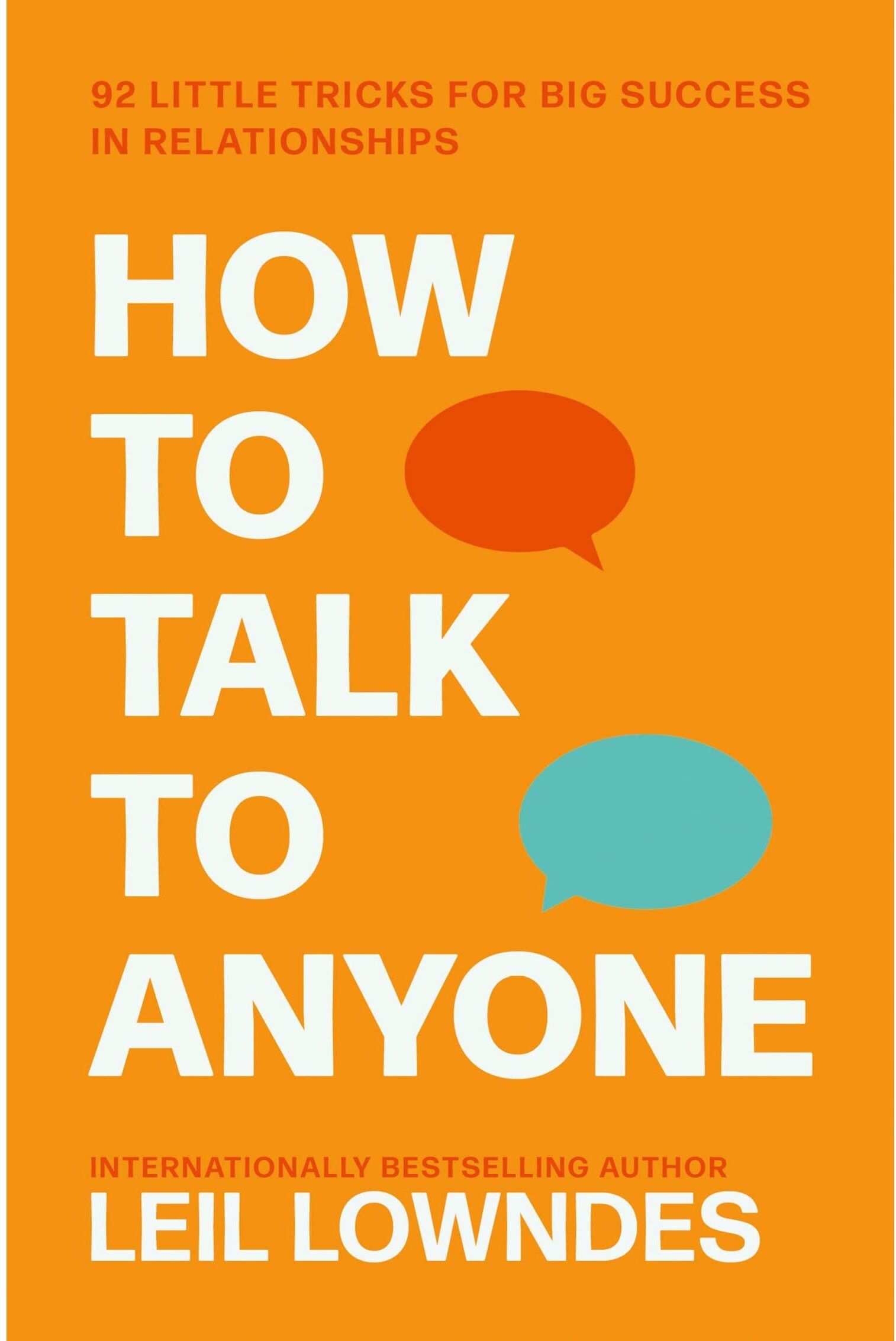
HARPERCOLLINS How to Talk to Anyone – 92 Little Tricks for Big Success in Relationships by Leil Lowndes Communication & Social Skills BestsellerMaster the art of confident communication. In How to Talk to Anyone: 92 Little Tricks for Big Success in Relationships, bestselling author and communication expert Leil Lowndes shares practical, easy-to-use techniques to help you connect with people in any situation. From networking events and job interviews to social gatherings and everyday conversations, this book shows you how to communicate with confidence, charisma, and impact. Packed with proven strategies on body language, first impressions, conversation starters, and listening skills, this timeless guide helps you overcome social anxiety, build rapport instantly, and leave a lasting impression. Whether you want to improve your personal relationships or advance your professional life, this book offers tools you can apply immediately. What You’ll Learn: How to start and end conversations effortlessly Secrets of confident body language and eye contact Techniques to build instant rapport and trust How to speak with authority and warmth Communication skills for work, dating, and social life A must-read for anyone looking to improve their social skills, networking ability, and personal confidence, How to Talk to Anyone is a classic self-help bestseller with lasting value.4,89 £*Shipping: 1,99 £Secure redirect to the provider
-
The Ethical Slut, Third Edition: A Practical Guide to Polyamory, Open Relationships, and Other Freedoms in Sex and Love by Janet W. WDescription. Condition: BRAND NEW. Format: Paperback. For 20 years The Ethical Slut has dispelled myths and showed curious readers how to maintain a successful polyamorous lifestyle through open communication, emotional honesty, and safer sex practices. The third edition of this timeless guide to communication and sex has been revised to include interviews with poly millennials (young people who have grown up without the prejudices their elders encountered regarding gender, orientation, sexuality, and relationships), tributes to poly pioneers, and new sidebars on topics such as asexuality, sex workers, and ways polys can connect and thrive. The authors also include new content addressing nontraditional relationships beyond the polyamorous paradigm of "more than two": couples who don't live together, couples who don't have sex with each other, nonparallel arrangements, couples with widely divergent sex styles, power disparities, and cross-orientation relationships, while utilizing nonbinary gender language and new terms that have come into common usage since the last edition.. Title. The Ethical Slut, Third Edition: A Practical Guide to Polyamory, Open Relationships, and Other Freedoms in Sex and Love by Janet W. W. Delivery. Content. Reviews99,99 £*Shipping: 0,00 £Secure redirect to the provider
-
How can one recognize main clauses and subordinate clauses?
Main clauses can stand alone as complete sentences, while subordinate clauses cannot. Subordinate clauses often begin with subordinating conjunctions such as "although," "because," "if," "when," or "while." They also often contain a subject and a verb, but they do not express a complete thought on their own. Main clauses, on the other hand, express a complete thought and can function as independent sentences. By identifying these characteristics, one can recognize main and subordinate clauses in a sentence. **
-
How can subordinate clauses be rewritten as main clauses?
Subordinate clauses can be rewritten as main clauses by removing the subordinating conjunction and making any necessary adjustments to the verb tense or word order. For example, the subordinate clause "because she was tired" can be rewritten as the main clause "she was tired." This transformation allows the subordinate clause to stand alone as a complete sentence. Additionally, any pronouns or other words that were dependent on the subordinating conjunction may need to be adjusted to ensure the new main clause is grammatically correct. **
-
How can adverbial clauses be used as subordinate clauses?
Adverbial clauses can be used as subordinate clauses to provide additional information about the main clause. They can modify the verb in the main clause by expressing time, place, manner, condition, reason, purpose, or concession. For example, in the sentence "She went to bed after she finished her homework," the adverbial clause "after she finished her homework" provides information about the timing of the main action "She went to bed." Adverbial clauses are introduced by subordinating conjunctions such as after, before, while, since, because, if, although, etc. **
-
How can main clauses and subordinate clauses be recognized?
Main clauses can be recognized by their ability to stand alone as complete sentences, containing a subject and a predicate. Subordinate clauses, on the other hand, cannot stand alone as complete sentences and are dependent on the main clause for their meaning. They often begin with subordinating conjunctions such as "because," "although," "while," or "if." Additionally, subordinate clauses often function as adverbial, adjectival, or nominal clauses, providing additional information about the main clause. **
* All prices are inclusive of VAT and, if applicable, plus shipping costs. The offer information is based on the details provided by the respective shop and is updated through automated processes. Real-time updates do not occur, so deviations can occur in individual cases. ** Note: Parts of this content were created by AI.